
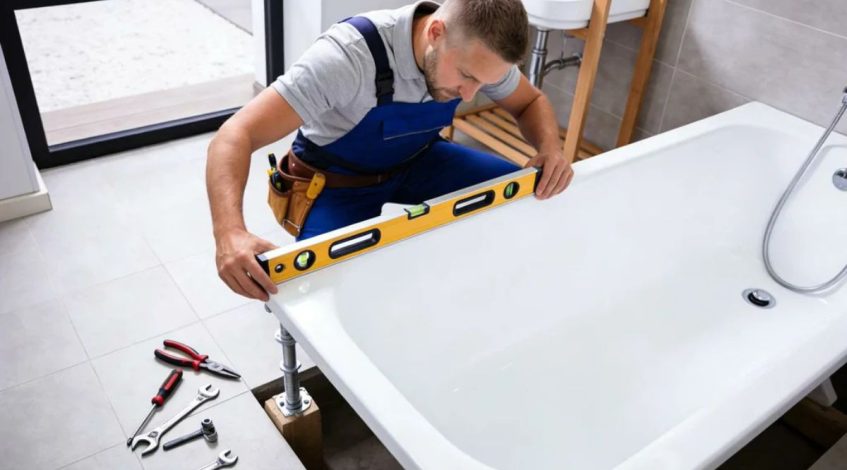
There’s a reason a bathtub remains one of the most sought-after features in an Australian home. Whether it’s a freestanding statement piece in a newly renovated ensuite, a practical family tub replacing one that’s seen better days, or a deep soaker being added to a bathroom that never had one – installing a bathtub is a meaningful upgrade that adds both everyday comfort and genuine property value. But if you’ve started looking for a rough bathtub installation cost in Australia, you’ve probably already noticed that the numbers are all over the place.
Why’s it so hard to get a straight answer on price?
The honest reason is that bathtub installation cost varies enormously depending on at least 6 factors that are specific to:
- Your bathroom
- Your chosen bathtub
- The scope of work involved.
A straightforward swap of one built-in tub for another is a very different job to installing a freestanding tub in a bathroom that’s never had one – and the price very much reflects that. The important thing to realise is that a quote that works for one property can be completely irrelevant for another.
In our exclusive Best Plumbers Club guide, we’ll break down the 6 most critical variables that influence the final cost – so you can go into the process with clear expectations, ask all the right questions, and avoid being caught off guard when the scope turns out to be larger than anticipated.
6 Factors that influence bathtub installation cost
Understanding these variables isn’t just useful for budgeting – it’s the difference between getting accurate quotes and getting a range so broad it tells you nothing.
Here’s what actually moves the needle on price.
1. The type of bathtub you choose
This is the most significant variable in the entire equation – and it affects not just the cost of the tub itself, but the complexity of the installation.
The main types common in Australian bathrooms today each come with their own installation considerations:
Freestanding bathtubs
The most popular choice in contemporary bathroom renovations right now, and it’s easy to see why. They sit independently on the floor, require no surrounding structure, and make an immediate design statement in any bathroom.
Installation involves connecting the waste and overflow to the floor drain and running the tap supply lines – but because freestanding tubs are floor-mounted rather than built into a surround, the plumbing needs to be positioned correctly beforehand. Moving or extending plumbing to suit the tub’s placement adds to the overall cost.
Built-in or alcove bathtubs
The traditional Australian standard – three walls on the sides, one open face, often with a tiled surround. They’re practical, space-efficient, and the most common type being replaced in older bathroom renovations.
Like-for-like replacement is typically more straightforward than other types. Introducing a built-in tub to a bathroom that didn’t previously have one, or changing the configuration significantly, adds scope.
Drop-in bathtubs
These ones are set into a platform or deck structure – the tub sits inside a custom-built frame, often tiled to match the rest of the bathroom.
The tub itself is just one part of the cost here – the platform structure needs to be built, waterproofed, and finished, which involves both a plumber and a tiler and adds meaningfully to the overall bath installation cost.
Japanese soaking tubs
They’re deeper and more compact than conventional Western bathtubs – designed for full-body immersion rather than lying down. They’re gaining popularity in Australian bathrooms for their space efficiency and the quality of the soak they provide.
Installation considerations depend on the specific model and whether it’s freestanding or built-in, but the depth means overflow and waste positioning needs careful attention.
Spa & jetted bathtubs
Now we’re adding a layer of complexity that goes beyond standard plumbing.
The jet system requires its own water supply, an air blower or pump, and electrical connections – which means a licensed electrician is involved in addition to the plumber. That additional trade involvement increases the overall bathtub installation labour cost compared to a standard tub.
Corner bathtubs
They make use of a corner footprint and typically require a surrounding deck or panel structure similar to a drop-in installation. They suit specific bathroom layouts and are a practical solution where a standard alcove configuration doesn’t work.
2. Whether you’re replacing or installing new
Replacing an existing bathtub is generally more straightforward than a new installation. And why?:
- The plumbing is already in place
- The floor waste is positioned
- The surrounding structure exists.
The old tub is removed, any necessary repairs to waterproofing or tiling are made, and the new one goes in.
A new bathtub installation cost in a bathroom that has never had a tub – or one being converted from a shower-only layout – involves more work:
- Plumbing needs to be run to the new location
- A floor waste installed
- Depending on the type of tub, surrounding structure built and waterproofed.
That’s a significantly more involved scope of work.
3. Plumbing relocation or extension
Even in bathrooms with an existing tub, the new unit may not have identical plumbing connection points to the old one. Freestanding tubs in particular often require floor-mounted tap connections that need to be positioned before the floor is finished – something that’s straightforward if planned early and more disruptive if retrofitted.
Any plumbing relocation, extension, or new rough-in work adds to the overall installing a bathtub cost in proportion to how much pipe work is involved and how accessible the existing plumbing is.
4. Waterproofing & tiling
Removing an old tub almost always reveals waterproofing that needs attention before a new one goes in – and in many cases, tiling around the new tub needs to be updated to suit the new configuration. This work sits outside the plumber’s scope and involves a tiler and waterproofer, both of whom add to the bathtub installation cost Australia wide.
If you’re doing a full bathroom renovation around the new tub, these costs are part of the broader project budget. If you’re doing a tub swap only, factor in that some tiling and waterproofing work is likely regardless.
5. Access & bathroom layout
Trades work costs more when access is difficult – and bathrooms are often the least accessible room in a home when it comes to moving large fixtures in and out.
What else adds complexity here:
- Upper floor bathrooms
- Tight doorways
- Narrow hallways
- Apartments with lift access.
Basically, it’s the difference between what would otherwise be a fairly straightforward removal and installation. A large freestanding tub on the third floor of an apartment building is a very different logistical exercise to the same tub going into a ground floor ensuite.
6. Labour rates & location
Bathtub installation labour cost varies by:
- Location
- Business
- When the work is being done.
Metropolitan and regional areas price differently. After-hours or urgent work carries a premium, while some trades charge a call-out fee separately from the installation labour – others roll it into the overall quote.
The most useful approach is to work with a licensed plumber who provides a fixed upfront price after seeing the job rather than a ballpark estimate over the phone.
The average cost of bathtub installation
Rather than quoting specific figures that may not reflect your situation, here’s a useful way to think about the average cost of bathtub installation in Australia:
- A straightforward like-for-like replacement of a built-in tub with accessible plumbing – broadly in the $1,500-$3,500 range for a mid-range acrylic unit including removal, plumbing connections, and basic waterproofing.
- A freestanding tub requiring plumbing relocation and floor-mounted tap connections – typically $3,500-$7,000 plus once you factor in the tub itself, the additional plumbing work, and floor supply line installation.
- A drop-in or spa tub requiring platform construction, waterproofing, tiling, and electrical work – realistically $7,000-$12,000 plus, with premium configurations pushing beyond that depending on materials and scope.
New bathtub installation cost in a bathroom being converted from shower-only involves the most scope and should be budgeted accordingly. Getting a fixed upfront quote after a proper site assessment is the only reliable way to get a number that’s actually relevant to your situation.
What to have ready before you call
A bit of preparation before reaching out for quotes will get you more accurate numbers faster:
- Know whether you’re replacing an existing tub or installing new
- Have the make, model, or type of bathtub you’re considering
- Know your bathroom layout and whether the plumbing will need to move
- Be aware of your floor material and whether tiling will be involved
- Know which floor of the property the bathroom is on.
Getting the right plumber for the job
Bath installation cost is only part of the equation – the quality of the installation matters just as much. A bathtub installed without proper waterproofing, incorrectly connected waste fittings, or poor sealing will cause water damage that costs far more to fix than the original installation was worth.
Licensed, reviewed plumbers who provide upfront pricing and guaranteed workmanship are the standard Best Plumbers Club holds its network to on every job.
Ready to get your bathtub installed?
Best Plumbers Club connects you with licensed, reviewed, and recommended local plumbers across Australia – ready to:
- Assess your bathroom
- Provide a fixed upfront quote
- Get your bathtub installation done properly.
Call or get a quote online – and a local plumber will be in touch.
Related posts:
 Choosing The Right Bathtub: What Do You Need To Know
 Bathroom Renovation Guide: Expert Tips for Planning & Budgeting
 Gas Cooktop Installation Cost in Australia: A Complete Breakdown
 How Much Does Toilet Installation Really Cost?
 Types of Taps For Your Bathroom And Kitchen
 Cold Plunge Plumbing: Installation, Care, And Troubleshooting